Before the Anesthesia: Why More Americans Are Getting a Second Surgical Opinion From Indian Specialists First
There is a moment that many surgical patients know well. The consent form is on the table. The surgery date has been scheduled. Insurance pre-authorization is in progress. And yet something — call it instinct, call it unease — makes a patient pause and ask: Is this truly the right path forward?
For a growing cohort of American patients, the answer to that question is no longer found solely within the US healthcare system. Increasingly, they are turning to board-certified specialists at institutions like Mera Clinic India for pre-surgical second opinions — consultations that are sometimes validating, occasionally revelatory, and, in certain cases, genuinely life-altering.
The Problem With Trusting One Voice
American medicine is, by almost any global measure, technically sophisticated. Its hospitals are well-equipped, its surgical training rigorous, and its research output unmatched. And yet the system has a structural blind spot that even its most ardent defenders acknowledge: patients are frequently funneled toward surgical intervention without adequate exploration of alternatives.
The reasons are not always nefarious. Surgeons are trained to operate. Specialists within a single hospital system may share institutional assumptions. Diagnostic frameworks can calcify around the first plausible explanation rather than the most accurate one. And in a fee-for-service environment, the financial incentives do not always align with conservative care.
A 2018 study published in JAMA Surgery found that second opinions in complex surgical cases led to a change in diagnosis or treatment plan in approximately 21 percent of cases. That figure represents hundreds of thousands of patients annually who may be proceeding toward surgery on incomplete or inaccurate clinical information.
Second opinions, in other words, are not a sign of distrust. They are a sign of due diligence.
Why India — and Why Now
The question American patients increasingly ask is not whether to seek a second opinion, but where to find one that is genuinely independent, deeply expert, and accessible without a six-week wait.
India has emerged as a compelling answer to that question for several reasons.
First, the depth of specialist training. Many of India's senior consultants hold postgraduate credentials from institutions in the United States, the United Kingdom, and continental Europe, in addition to their Indian qualifications. They are not approximating Western medical standards — they are, in many cases, the same physicians who trained alongside their American counterparts.
Second, the structural independence. An Indian specialist reviewing a case has no institutional relationship with the US hospital recommending surgery, no shared referral network, and no financial stake in the outcome of the recommendation. That independence is precisely what makes the opinion valuable.
Third, and perhaps most practically, the accessibility. Virtual consultations with Mera Clinic India's specialists can be arranged within days, not months, and at a fraction of what a formal second-opinion program at a major US academic center would cost — assuming one could secure an appointment at all.
What These Consultations Actually Reveal
The range of outcomes from pre-surgical consultations with Indian specialists is broader than most American patients anticipate.
In some cases, surgery is confirmed as the appropriate course of action. A patient presenting with severe lumbar stenosis, for example, may receive a thorough review of their MRI and surgical plan and emerge with greater confidence that the recommended procedure is sound. This validation is itself a form of clinical value — a patient who goes into surgery with confidence and informed consent heals differently than one who carries doubt.
In other cases, alternative treatments are identified. Consider the American patient who was told she required a hysterectomy for symptomatic fibroids. After a virtual consultation with a gynecologist at Mera Clinic India who specializes in minimally invasive uterine procedures, she learned that she was a strong candidate for uterine fibroid embolization — a non-surgical intervention with a shorter recovery period and no impact on fertility. Her US physician had not mentioned it. Her Indian consultant made it the centerpiece of the conversation.
In still other cases, the diagnosis itself is called into question. One particularly significant category of pre-surgical second opinions involves patients whose presenting symptoms have been attributed to one condition when the underlying cause is something else entirely. A patient scheduled for knee replacement surgery, for instance, may have pain patterns consistent with referred discomfort from a lumbar or hip condition — a distinction that, if missed, would result in an unnecessary and expensive surgical procedure.
And occasionally, the consultation reveals that surgery is not only inadvisable but potentially harmful. These are the rarest outcomes, but they are also the most consequential. Patients with undiagnosed cardiac conditions, clotting disorders, or contraindicated medications who proceed to elective surgery face risks that a thorough pre-operative second opinion might have flagged.
The Mechanics of a Pre-Surgical Consultation at Mera Clinic India
For American patients unfamiliar with the process, seeking a pre-surgical second opinion from an Indian specialist is considerably more straightforward than it might initially appear.
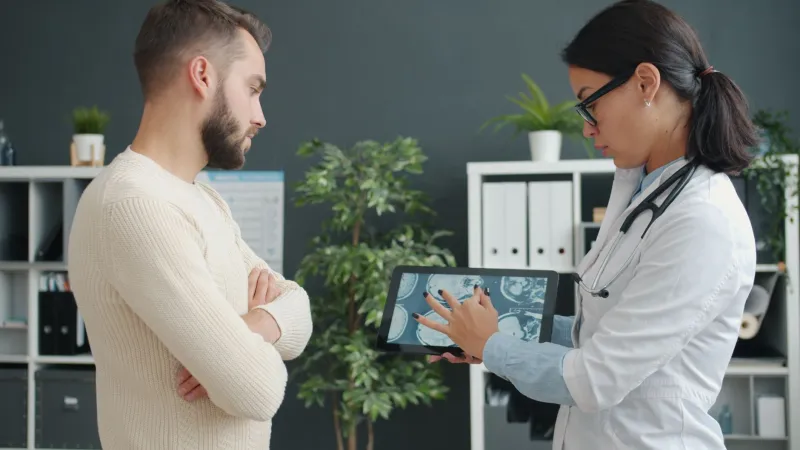
The consultation typically begins with the submission of existing medical records — imaging studies, pathology reports, surgical plans, and clinical notes. These documents are reviewed by a specialist matched to the specific procedure in question: a cardiac surgeon for valve repair recommendations, an orthopedic spine specialist for fusion surgery proposals, an oncologist for cancer-related interventions.
A structured video consultation follows, during which the specialist discusses findings, asks clarifying questions, and offers a formal clinical assessment. That assessment is documented and provided to the patient in written form — a record they can share with their US physician, their family, or any other clinician involved in their care.
The process is designed not to replace the American physician's judgment but to complement it. The goal is not conflict; it is clarity.
Informed Consent as a Practice, Not a Formality
American healthcare law treats informed consent as a legal requirement. American healthcare culture, however, does not always treat it as a genuine practice. Patients sign forms they do not fully understand, consent to procedures whose alternatives they have never been offered, and enter operating rooms carrying questions they were never given adequate time to ask.
A pre-surgical consultation with a specialist who has no stake in the outcome and no time pressure to move toward a procedure can fundamentally change that dynamic. It creates space for the kind of deliberate, unhurried clinical conversation that the US system frequently fails to provide.
This is, at its core, what Mera Clinic India offers: not a replacement for American medicine, but a complement to it — an independent clinical voice that helps patients arrive at surgical decisions with genuine understanding rather than passive compliance.
A Different Kind of Empowerment
Patient empowerment has become something of a cliché in American healthcare discourse. It appears in hospital brochures and insurance marketing campaigns with equal frequency. But genuine empowerment — the kind that comes from having access to multiple expert perspectives before a consequential medical decision — remains elusive for most Americans.
Seeking a second opinion from a qualified Indian specialist before major surgery is one of the most concrete and immediately actionable forms of self-advocacy available to American patients today. It costs less than a single night's hospital stay. It requires no travel. And it may, in ways that are impossible to predict in advance, change everything.
For patients who have been handed a surgery date and told to prepare, that conversation — the one that happens before the anesthesia — is worth having.