Beyond the Referral Maze: How India's Hyper-Specialized Medical Experts Are Reaching Patients America's System Left Behind
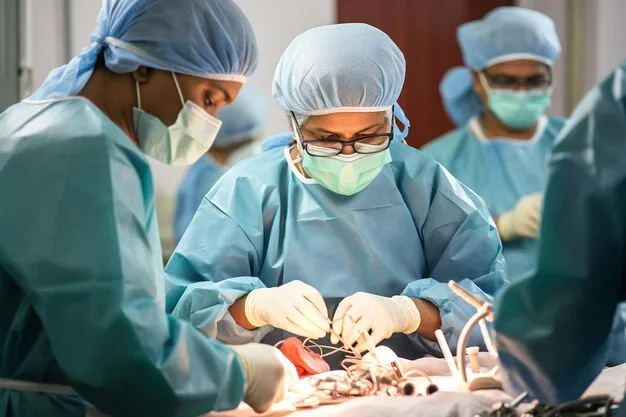
Photo: Indian neurosurgeon specialist operating room complex surgery team, via img.freepik.com
When 'See a Specialist' Is Not Enough
American patients are accustomed to hearing a familiar refrain: get a referral, see a specialist, wait for an appointment. For routine conditions, this pathway functions reasonably well. But for patients whose diagnoses fall into narrower, more complex territory — conditions that require not merely a specialist, but a subspecialist — the American referral model can collapse into something resembling a bureaucratic labyrinth.
Consider a patient in the Midwest diagnosed with a rare bile duct tumor. Their oncologist refers them to a general gastrointestinal surgeon. That surgeon, unfamiliar with the nuances of hepatobiliary resection, refers them to a larger regional center. The regional center has one hepatobiliary surgeon on staff — who is booked four months out and sees only a handful of such cases per year. The patient waits. The tumor does not.
This is not an isolated scenario. It is, in many ways, a structural feature of how American medicine distributes — or fails to distribute — highly specialized expertise.
The Fragmentation Problem No One Talks About
The United States produces extraordinary medical talent. Its residency programs, research institutions, and academic medical centers are genuinely world-class. But producing excellent physicians and distributing them efficiently are two entirely different challenges — and the US has struggled significantly with the latter.
In subspecialty medicine, concentration is the norm. Pediatric neurosurgeons, hepatobiliary oncologists, complex spinal deformity specialists, and craniofacial reconstructive surgeons tend to cluster in a handful of major metropolitan centers — Boston, Houston, New York, Los Angeles. For a patient in rural Tennessee, a small city in the Pacific Northwest, or even a mid-sized Midwestern metro, accessing that expertise can require not only months of waiting but significant travel, lodging, and logistical coordination within the United States itself.
And even at the nation's most prestigious academic medical centers, the number of physicians practicing in any given narrow subspecialty is often strikingly small. A hospital may have one surgeon who performs a particular complex procedure. If that surgeon is unavailable, the patient waits — or looks elsewhere.
How Indian Hospitals Developed Subspecialty Depth
India's trajectory in specialized medicine followed a different path. Driven partly by the scale of its domestic patient population and partly by a deliberate institutional investment in subspecialty training, India's major tertiary care hospitals developed concentrated expertise in ways that are genuinely difficult to replicate in lower-volume environments.
At institutions affiliated with Mera Clinic India's network, subspecialty departments are not organized around one or two senior physicians. They are built as teams — multiple surgeons with deep, focused experience in a single domain, supported by dedicated anesthesiologists, intensivists, and rehabilitation specialists who work exclusively within that clinical area. A hepatobiliary oncology unit, for example, may perform hundreds of complex resections annually. A pediatric neurosurgery department may see case volumes that most American centers would encounter across a decade.
Volume matters in complex surgery. It matters in diagnostic interpretation. It matters in the kind of pattern recognition that separates a good physician from an exceptional one. When a subspecialist has seen your condition not dozens of times but hundreds — or thousands — of times, the quality of their clinical judgment reflects that experience in ways that are difficult to quantify but impossible to ignore.
The Subspecialties Where the Gap Is Most Pronounced
Certain clinical domains illustrate the disparity with particular clarity.
Hepatobiliary and Pancreatic Surgery: Conditions affecting the liver, bile ducts, and pancreas often require surgical interventions of extraordinary technical complexity. In India's leading centers, dedicated hepatopancreaticobiliary (HPB) units operate with team structures and case volumes that position them among the most experienced in the world.
Pediatric Neurosurgery: Families of children with brain tumors, complex epilepsy, or congenital neural abnormalities frequently discover that pediatric neurosurgical expertise in the US is concentrated in very few institutions. Indian centers with dedicated pediatric neurosurgical programs have served international families precisely because the expertise is accessible, experienced, and available without multi-month delays.
Complex Orthopedic Reconstruction: Revision joint replacement, limb deformity correction, and complex spinal deformity surgery represent areas where India's orthopedic centers have developed internationally recognized subspecialty depth. Patients who have been told their cases are "too complicated" by general orthopedic surgeons in the US have found resolution at Indian institutions with teams built specifically for such presentations.
Interventional Cardiology and Structural Heart Disease: Transcatheter valve procedures, complex congenital heart interventions, and high-risk coronary cases are performed at Indian cardiac centers with volumes and outcomes data that benchmark favorably against international standards.
What the Referral Journey Actually Costs
For American patients navigating subspecialty fragmentation, the costs are not only financial — though those are significant. There is the cost of delayed diagnosis, during which conditions progress. There is the cost of repeated consultations with physicians who are candid about the limits of their expertise. There is the cost of traveling domestically to reach a major academic center, often without insurance coverage for associated expenses. And there is the psychological cost of existing in diagnostic limbo while the referral chain slowly extends.
Patients who have made the decision to pursue care in India through Mera Clinic India's coordination services frequently describe a striking contrast: within days of initial virtual consultation, they were connected with a subspecialist who had seen their specific condition repeatedly, who reviewed their imaging with genuine familiarity, and who offered a concrete clinical plan — not another referral.
Coordinating Complex Care Across Borders
The legitimate concern for any American patient considering subspecialty care in India is coordination: how does one navigate a foreign medical system, ensure continuity of care with physicians at home, and manage the practical logistics of complex treatment in an unfamiliar country?
This is precisely the function that Mera Clinic India is designed to serve. From initial case review — which can begin with a virtual consultation before any travel is booked — through treatment planning, in-country support, and structured post-treatment communication with a patient's US-based providers, the coordination infrastructure exists to make subspecialty access practical rather than theoretical.
Medical records are reviewed. Second opinions are facilitated. Treatment timelines are communicated in plain language. And patients return home with documentation structured to support continuity with their American care team.
The Right Expert, Finally
For patients who have spent months or years being passed from one well-meaning generalist to the next, the experience of finally reaching a physician with genuine, concentrated expertise in their specific condition can be quietly transformative. Not because the diagnosis changes — sometimes it does not — but because clarity, competence, and a coherent plan are themselves a form of care.
India's subspecialty depth is not a secret within global medical circles. It is, however, still underappreciated by American patients who assume that the best option must be the closest option. For complex cases, that assumption deserves examination.
The right subspecialist may not be in your city. They may not be in your region. But they may be reachable — and Mera Clinic India exists to help you reach them.