When 'There's Nothing More We Can Do' Is Not the End: How Indian Specialists Are Solving Diagnoses American Medicine Has Given Up On
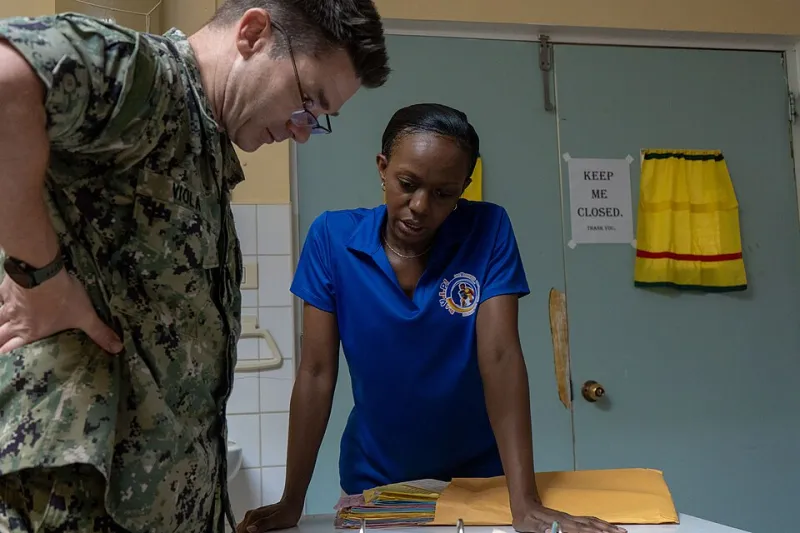
Photo: U.S. Army 21TSC by [null Courtesy], Public domain, via Wikimedia Commons
There is a particular kind of exhaustion that settles over a patient who has been told, for the third or fourth time by a different physician, that their suffering is simply the new normal. The referrals stop. The testing cycles slow down. The language shifts — from 'let's investigate further' to 'managing your symptoms long-term.' For millions of Americans living with conditions labeled as chronic, idiopathic, or untreatable, that transition can feel less like a medical conclusion and more like an abandonment.
What many of those patients do not yet know is that the conclusion their American doctors reached is not always a universal one.
The Diagnostic Ceiling in American Medicine
The United States operates one of the most technologically advanced healthcare systems in the world. And yet, paradoxically, that same system carries structural limitations that can work against patients with complex or atypical presentations.
American specialists are, by design, narrow in their focus. A rheumatologist examines the joints. A neurologist examines the nervous system. A gastroenterologist examines the digestive tract. When a patient's condition crosses multiple systems — or when symptoms don't fit cleanly into an established diagnostic category — the American model can struggle. Each specialist rules out what falls outside their domain, and the patient leaves each appointment with another dead end rather than a clearer picture.
Time is a compounding factor. The average specialist appointment in the United States lasts between fifteen and twenty minutes. Building a comprehensive understanding of a patient's full history, lifestyle, genetic background, and symptom evolution within that window is, practically speaking, nearly impossible. What gets lost in those abbreviated encounters is often precisely the detail that would change the diagnosis.
A Different Framework for Complex Cases
At Mera Clinic India, the approach to diagnostically challenging cases begins from a fundamentally different premise. Rather than routing a patient through sequential, siloed consultations, the clinic assembles multidisciplinary review panels for complex presentations — groups of specialists from relevant fields who evaluate the patient's case together, cross-referencing findings in real time rather than in isolation.
This collaborative model is not unique to Mera Clinic India, but it is emblematic of how leading Indian medical institutions have structured their diagnostic philosophy. Indian physicians are trained within a system that places high value on clinical observation and pattern recognition alongside laboratory and imaging data. In many cases, this means a physician will spend considerably more time reviewing a patient's full history before reaching for a diagnostic label.
For American patients arriving with thick folders of inconclusive test results, that shift in methodology can produce outcomes that feel, at first, almost implausible.
Case Study: A Decade of Wrong Answers
Consider the experience of a woman in her early forties from the Pacific Northwest who had spent nearly ten years cycling through diagnoses. She had been told at various points that she had fibromyalgia, a conversion disorder, and a generalized anxiety condition with somatic symptoms. Her fatigue was profound, her joint pain was real, and her cognitive difficulties were documented — yet every specialist she visited in the United States eventually arrived at the same conclusion: there was no identifiable organic cause.
After reading about medical travel options through an online patient community, she arranged a comprehensive evaluation at an Indian specialist center. Within two weeks of her arrival, a multidisciplinary team identified a rare autoimmune condition with overlapping features that had been systematically missed because no single specialist in her American care history had reviewed her complete case profile simultaneously. She began targeted treatment before she flew home. Within three months, her symptoms had measurably improved for the first time in a decade.
Her story is not an anomaly. It is, increasingly, a pattern.
Why Fresh Eyes Abroad See What Familiar Eyes Miss
There are several reasons why an independent evaluation by Indian specialists can unlock diagnoses that American medicine has closed the door on.
First, there is the matter of cognitive bias. A physician who has reviewed a patient's file and arrived at a conclusion — or who is inheriting a conclusion made by a respected colleague — faces a significant psychological barrier to reconsidering it. Indian specialists approaching the same case carry none of that inherited certainty. They review the data without the weight of previous conclusions coloring their interpretation.
Second, Indian medical training draws on an extraordinarily diverse patient population. India's geographic and genetic diversity means that physicians trained there have clinical exposure to a wider range of rare conditions, atypical disease presentations, and complex multi-system disorders than many of their Western counterparts. A condition that appears once in a thousand American patient panels may appear far more frequently in an Indian clinical environment — and therefore be more readily recognized.
Third, the cost structure of Indian healthcare enables a depth of diagnostic investigation that is often financially out of reach in the United States. Comprehensive panels, extended consultations, and follow-up testing that would generate tens of thousands of dollars in American billing can be conducted in India at a fraction of that cost. Patients are not pressured to limit their diagnostic workup based on what their insurer will authorize.
What a Second Opinion in India Actually Involves
For American patients considering this path, it is worth understanding what a structured second opinion evaluation at a facility like Mera Clinic India typically entails. The process generally begins before a patient boards a flight, with a virtual pre-consultation during which physicians review existing records and determine which specialists should be involved in the in-person evaluation.
Upon arrival, patients undergo a structured assessment period — often spanning several days — during which they meet with relevant specialists, complete any additional diagnostic testing deemed necessary, and participate in a case review that consolidates findings into a coherent clinical picture. The outcome is not simply a second opinion in the narrow sense of the term. It is a fresh diagnostic workup conducted by a team that has reviewed everything together.
Patients leave with a written summary of findings, a recommended treatment plan, and — critically — a point of contact for ongoing remote consultation as they return home and begin implementing recommendations.
The Question Worth Asking
For any American patient who has been told that their condition is simply something they must learn to live with, one question is worth sitting with: has every reasonable diagnostic avenue genuinely been explored, or has the system simply reached the edge of what it was structured to find?
The answer, for a meaningful number of patients, turns out to be the latter. And for those individuals, the distance between a dismissed diagnosis in the United States and a resolved one in India is measured not in miles, but in the willingness to seek a perspective the domestic system was not built to offer.
Mera Clinic India exists precisely for that moment — when the journey toward an answer is not over, even if an American physician has suggested it is.
To request a pre-consultation review of your case with Mera Clinic India's specialist team, visit meraclinicindia.com.