When Your Doctor Isn't Available for Months: How India's Specialist Depth Is Giving American Patients a Real Alternative
Photo: U.S. Navy photo by Petty Officer 2nd Class Jonas Womack, Public domain, via Wikimedia Commons
The Wait Is Not an Inconvenience — It Is a Medical Risk
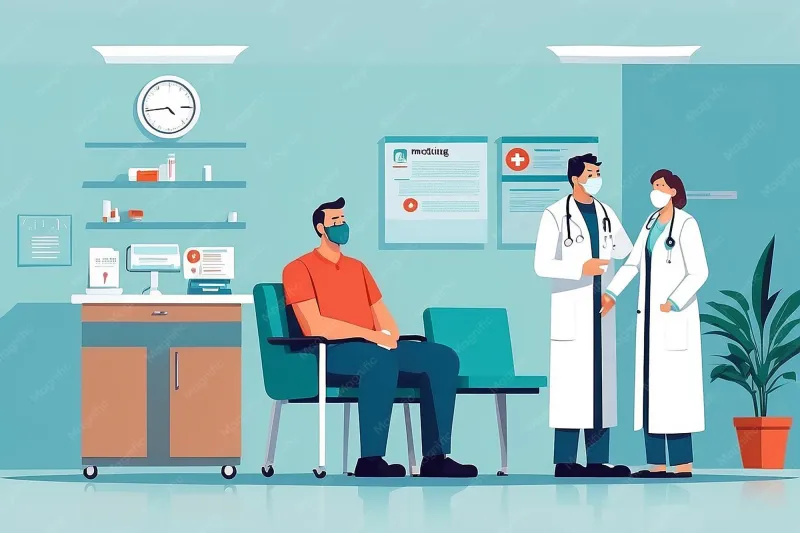
When a physician in Omaha or Atlanta tells a patient they will need to wait four months to see a cardiologist, that delay is rarely framed as dangerous. It is presented as routine — an unfortunate but unavoidable feature of American healthcare. Patients nod, accept the appointment card, and go home to wait.
But waiting is not neutral. For conditions involving the heart, spine, endocrine system, or oncology, weeks of diagnostic delay can meaningfully alter treatment outcomes. The American College of Cardiology has documented cases in which delayed specialist access contributed to disease progression that earlier intervention could have mitigated. The problem is structural, and it is not improving.
According to data published by the Association of American Medical Colleges, the United States is projected to face a shortage of between 37,800 and 124,000 physicians by 2034, with specialist fields bearing a disproportionate burden of that deficit. The ratio of physicians to population in the US currently sits at approximately 2.6 per 1,000 people. In major Indian metropolitan medical hubs — cities like Chennai, Mumbai, Hyderabad, and New Delhi — that ratio tells a different story at the tertiary care level, where teaching hospitals and specialty centers have cultivated dense concentrations of fellowship-trained consultants across virtually every discipline.
For American patients who have exhausted their patience with the domestic system, this disparity is no longer an abstract statistic. It has become a travel itinerary.
Where the Shortage Hits Hardest
Not every medical specialty suffers equally from access problems in the United States. But several fields stand out as particularly difficult for patients navigating the domestic system.
Rheumatology is among the most constrained. The American College of Rheumatology estimates there are fewer than 5,000 practicing rheumatologists in the country — a number that has remained essentially flat for over a decade while the population of patients with autoimmune and inflammatory conditions has grown substantially. Patients with suspected lupus, ankylosing spondylitis, or early-stage rheumatoid arthritis frequently wait three to five months for an initial consultation, during which time joint damage may be progressing unchecked.
Neurological subspecialties present a similar challenge. Movement disorder specialists, epileptologists, and neuromuscular disease experts are concentrated in academic medical centers that serve enormous geographic catchment areas. A patient in rural Tennessee seeking a second opinion on a Parkinson's diagnosis may face a six-month queue — if they can access the specialist at all.
Reproductive endocrinology and fertility medicine is another field where demand has dramatically outpaced supply. Clinics across the country routinely carry waiting lists measured in months, and the emotional weight of that delay on patients pursuing fertility treatment is considerable.
Orthopedic surgery and specifically joint replacement carries well-documented wait time problems in many regions, particularly for patients whose insurance networks limit their provider options. Patients in their fifties and sixties — often still working, still mobile, but experiencing significant pain — find themselves told to manage symptoms until a surgical slot opens.
In each of these fields, Indian specialty hospitals and clinics affiliated with networks like Mera Clinic India are offering consultations within days, not months.
Credentialing Is Not an Afterthought
A reasonable skepticism greets any claim that care delivered faster is care delivered at equivalent quality. American patients — rightly — want to know who is treating them and what qualifies that physician to do so.
The answer, in the context of India's leading medical institutions, is often more reassuring than patients expect. A significant proportion of senior consultants at India's top-tier hospitals completed postgraduate training at institutions in the United Kingdom, the United States, Canada, or Australia before returning to practice. Fellowship training at institutions affiliated with the Royal Colleges, Johns Hopkins, Mayo Clinic, or equivalent programs is common among consultants at accredited Indian hospitals.
Beyond individual credentials, institutional accreditation provides a structural quality signal. Hospitals accredited by the National Accreditation Board for Hospitals and Healthcare Providers (NABH) — India's national standard — or those holding Joint Commission International (JCI) accreditation operate under protocols that are explicitly designed to meet or exceed Western benchmarks. JCI, in particular, is the same accreditation body that evaluates hospitals in the United States, making it a direct comparator.
Mera Clinic India works exclusively with hospitals and specialists who meet these credentialing standards, and patient-facing documentation — including physician CVs, hospital accreditation certificates, and outcome data for common procedures — is made available during the consultation and planning process.
What Faster Access Actually Looks Like in Practice
Consider a patient in her mid-forties presenting with persistent joint inflammation, elevated inflammatory markers, and a referral from her primary care physician to rheumatology. In her home city, the earliest available rheumatology appointment is fourteen weeks out. Her symptoms are worsening. She begins researching alternatives.
Through Mera Clinic India, she schedules a virtual consultation with a senior rheumatologist in Chennai within five days. That consultation includes a review of her existing lab work, a detailed symptom history, and a provisional assessment with a recommended diagnostic pathway. She receives a written clinical summary within 48 hours. If she chooses to travel for further evaluation and treatment, she is seen in person within two weeks of booking — and the total cost of consultation, diagnostics, and initial treatment is a fraction of what her US insurer would charge in out-of-pocket costs, assuming coverage at all.
This is not an exceptional case. It is a representative one.
The Structural Argument for Looking Abroad
American patients are conditioned to believe that their healthcare system — despite its well-publicized flaws — remains the global standard for specialist medicine. That belief is increasingly difficult to sustain when patients are waiting months for diagnoses that physicians in other countries can deliver within days.
The specialist shortage in the United States is not a temporary disruption. It is a structural feature of a system that has underinvested in physician training pipelines, concentrated specialist access in urban academic centers, and allowed insurance network restrictions to create artificial barriers between patients and the care they need.
India's medical infrastructure — built over decades of investment in medical education, teaching hospitals, and specialty training — has produced a depth of specialist availability that is now accessible to international patients at a quality level that requires no apology.
For American patients who have been told to wait, the more precise question is this: wait for what, and at what cost to your health?
Mera Clinic India exists to help patients answer that question honestly — and to connect them with world-class specialist care that does not ask them to put their health on hold.
To learn more about specialist consultation options or to schedule a virtual appointment, visit meraclinicindia.com.