No Diagnosis, No Direction: How Americans With Rare Conditions Are Finally Finding Answers at India's Integrated Medical Centers

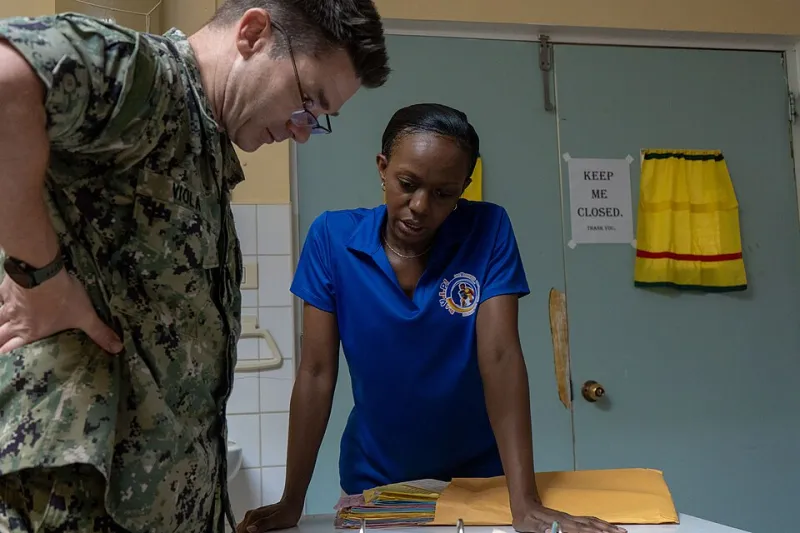
Photo: Indian Navy, GODL-India, via Wikimedia Commons
When the American Healthcare System Runs Out of Answers
For most Americans, the journey toward a rare disease diagnosis does not begin with clarity — it begins with confusion. A primary care physician refers a patient to a neurologist. The neurologist suggests a rheumatologist. The rheumatologist orders tests, finds something unusual, and sends the patient to a geneticist three states away. Months pass. Sometimes years. The average rare disease patient in the United States waits nearly five years for an accurate diagnosis, according to data from the National Organization for Rare Disorders. During that window, they accumulate medical bills, emotional exhaustion, and — in many cases — irreversible disease progression.
This is not a failure of individual physicians. It is a structural problem. The American healthcare system was largely built around common conditions. Rare diseases, by definition, fall outside that architecture. Specialists operate in professional silos. Electronic records do not always communicate across hospital systems. Insurance networks limit which experts a patient can access. The result is a diagnostic experience that is fragmented by design.
India's leading multi-specialty medical centers operate on a fundamentally different model — and for a growing number of American patients with complex, uncommon conditions, that difference is proving to be life-changing.
What "Integrated Care" Actually Means in Practice
The phrase "integrated care" is used frequently in American healthcare marketing, but it rarely reflects the clinical reality. At India's top-tier hospitals — facilities such as those affiliated with NABH accreditation and staffed by physicians trained at institutions including Johns Hopkins, the Mayo Clinic, and the Cleveland Clinic — integration is structural, not aspirational.
When a patient with a suspected rare condition arrives at one of these centers, they are not handed a referral slip and told to schedule appointments across different buildings or boroughs. Instead, a coordinating physician assembles a multidisciplinary team — which may include a neurologist, a metabolic specialist, a genetic counselor, a radiologist, and a pathologist — who review the case collectively, often within the same week. Diagnostic imaging, laboratory work, and specialist consultations are sequenced and interpreted together rather than in isolation.
This model is not unique to rare diseases, but it is where the difference is most acutely felt. When a condition is uncommon, the margin for diagnostic error is higher, and the cost of miscommunication between specialists is steeper. Coordinated review at the point of diagnosis reduces both risks substantially.
The Case of a Midwest Patient With an Undiagnosed Metabolic Disorder
Consider the experience of a patient from Ohio — a woman in her late thirties who had spent four years cycling through gastroenterologists, endocrinologists, and neurologists without receiving a coherent explanation for her constellation of symptoms: chronic fatigue, episodic confusion, abnormal liver enzymes, and peripheral neuropathy. Each specialist addressed their piece of the puzzle. None addressed the whole.
After connecting with Mera Clinic India through an online patient community for rare disease families, she underwent a comprehensive intake process that included a detailed case review by a team spanning hepatology, neurology, and clinical genetics. Within ten days of her arrival in India, she received a diagnosis of a rare mitochondrial disorder — a condition that had been present in her records for years but had never been identified because no single American specialist had reviewed the full picture simultaneously.
Her treatment plan, developed collaboratively by the same team that diagnosed her, was documented and transmitted to her primary care physician in the United States before she boarded her return flight. She did not leave India with a stack of separate specialist reports. She left with a unified care plan.
Why India's Medical Infrastructure Supports Rare Disease Work
Several structural factors make India's major medical centers particularly well-suited to complex and rare disease management.
First, the sheer concentration of specialists within single institutions is remarkable. Hospitals in cities such as Chennai, Mumbai, Hyderabad, and New Delhi routinely house hundreds of practicing consultants across dozens of subspecialties — a density that makes multidisciplinary collaboration logistically feasible in a way that is simply not replicable in most American cities outside of a handful of academic medical centers.
Second, the cost structure in India allows for more exhaustive diagnostic workups without the financial gatekeeping that governs care in the United States. In the American system, insurers frequently deny authorization for advanced genetic testing or rare disease panels on the grounds that the condition has not yet been confirmed — a circular logic that traps patients in diagnostic limbo. In India, the same tests are available at a fraction of the cost and without the prior authorization barriers that delay care domestically.
Third, many Indian physicians who specialize in rare and complex conditions received their subspecialty training at institutions in the United States, the United Kingdom, or Europe. They are not unfamiliar with the diagnostic frameworks that American patients bring with them. They are, in many cases, operating within those same frameworks — with the added advantage of an institutional environment that supports collaborative rather than siloed practice.
Navigating the Process as an American Patient
For Americans considering India for rare disease evaluation, the process begins well before the flight. Mera Clinic India works with patients in the pre-travel phase to gather and organize existing medical records, imaging studies, pathology reports, and prior specialist correspondence. This documentation is reviewed by the coordinating physician team in advance, so that the diagnostic process in India does not begin from zero.
Virtual consultations are available prior to travel, allowing patients and their families to understand what the in-person evaluation will involve, which specialists will participate, and what the realistic timeline looks like. For patients who have spent years being told "we're not sure," having a clear structure before they arrive is itself a meaningful form of reassurance.
Post-diagnosis support is also a critical component of the Mera Clinic India model. Rare disease management is rarely a single-visit undertaking. Patients return home with documentation designed for continuity — structured in a format that American physicians can act on, with contact protocols for follow-up consultations with the Indian specialist team as the treatment plan evolves.
The Broader Significance for Rare Disease Families
The rare disease community in the United States is larger than most people realize. Approximately 30 million Americans are living with a condition classified as rare — defined as affecting fewer than 200,000 people nationally. Despite that collective scale, rare disease patients remain underserved by a healthcare system that prioritizes volume and common presentations.
For these patients, the question is not whether to seek care outside conventional channels. Many have already been doing that for years, traveling domestically to academic medical centers, enrolling in research protocols, and self-educating out of necessity. The question is whether India's integrated medical centers represent a genuinely viable option — and for a growing number of families, the answer is yes.
World-class care, in this context, means something specific: not just access to skilled physicians, but access to a system designed to let those physicians work together. That is what Mera Clinic India offers patients who have been searching for answers for far too long.