Why 'My Doctor' Still Means Something in India — And What American Patients Are Losing Without It

There is a word embedded in the name of this clinic that carries more weight than it might initially appear to. Mera — Hindi for "mine" — is not simply a grammatical possessive. In the cultural context from which it comes, it signals ownership, belonging, and personal responsibility. When an Indian patient says "mera doctor," they are not describing a name on an insurance card. They are describing a relationship.
That distinction, subtle as it sounds, may explain one of the most striking differences between healthcare experiences in India and the United States — and why a growing number of American patients are traveling thousands of miles to reclaim something their own system quietly took from them.
The Assembly Line Problem Nobody Wants to Name
American medicine is, by most structural measures, built for throughput. Hospital systems are rewarded for volume. Physicians operate under productivity metrics that translate, in practical terms, to appointment slots of fifteen minutes or fewer. Electronic health records — ostensibly tools of coordination — have become documentation burdens that pull physician attention away from the patient sitting in the room.
The results are well-documented, even if rarely acknowledged in clinical settings. Studies published in peer-reviewed journals have consistently found that diagnostic errors affect an estimated 12 million Americans annually in outpatient settings alone. A significant proportion of those errors trace back not to technical failure, but to insufficient time spent understanding the patient's full history, lifestyle context, and symptom trajectory.
This is not a criticism of American physicians as individuals. Most entered medicine with precisely the kind of patient-centered values that the system then systematically erodes. It is a structural problem — one that emerges when healthcare is organized primarily around billing codes, insurance reimbursements, and institutional efficiency targets rather than around the patient as a whole person.
What Personalized Care Actually Looks Like in Practice
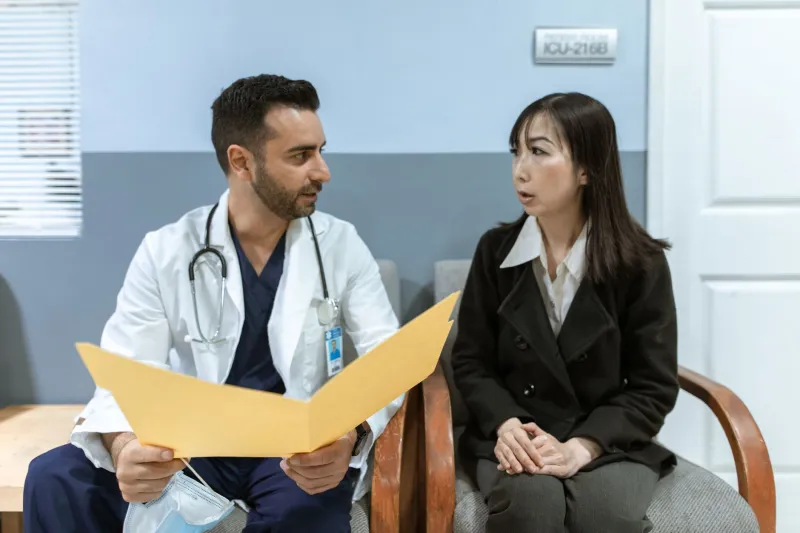
At India's leading specialty clinics — including those operating under integrated care models — the architecture of a patient encounter is fundamentally different. Consultations at Mera Clinic India are designed to allow physicians the time necessary to understand not just a presenting complaint, but the patient's broader medical history, family background, occupational stressors, and treatment preferences.
This is not a luxury offering. It is a clinical methodology. When a physician knows a patient across multiple visits and years, the signal-to-noise ratio in diagnostic reasoning improves substantially. Subtle changes in presentation that might be dismissed in a brief encounter become legible patterns over time. Medication adjustments are informed by a richer understanding of how a particular patient metabolizes treatment — not just what a clinical guideline recommends for a demographic cohort.
The concept of mera maps directly onto this model. The physician is, in a meaningful sense, the patient's physician — not a rotating provider in a shared panel of thousands.
The Relationship as a Diagnostic Tool
One of the more underappreciated aspects of long-term doctor-patient relationships is their diagnostic function. In American primary care, continuity of care has become increasingly rare. Patients frequently see different providers within the same practice, or shift entirely when insurance networks change. The cumulative knowledge that once lived in the relationship now lives — incompletely — in an electronic record that a new provider must interpret without context.
Indian specialists trained in integrated care models approach this differently. The intake process at Mera Clinic India, for instance, is designed to reconstruct longitudinal context even for new international patients. Detailed pre-consultation questionnaires, review of prior imaging and laboratory results, and extended initial consultations allow physicians to build the kind of picture that American medicine often assumes is already assembled — but rarely is.
For American patients arriving with complex, unresolved, or mismanaged conditions, this thoroughness is frequently the difference between finally receiving an accurate diagnosis and returning home with another inconclusive workup.
Satisfaction as an Outcome, Not a Survey Score
American hospital systems have, in recent years, made considerable investments in patient satisfaction measurement. Press Ganey scores, HCAHPS surveys, and Net Promoter metrics have become standard instruments. The irony is that this quantification of satisfaction has done relatively little to address the underlying drivers of dissatisfaction — namely, that patients do not feel heard, do not understand their diagnoses, and do not experience meaningful continuity in their care.
Patient satisfaction in India's relationship-based care model tends to emerge organically from the encounter itself rather than from post-visit survey design. When a patient has adequate time with a physician, receives a clear explanation of their condition, and leaves with a treatment plan they were genuinely involved in constructing, satisfaction is not something that needs to be measured through a follow-up email. It is evident in whether the patient returns — and whether they refer others.
For American patients who have grown accustomed to feeling processed rather than treated, this difference is frequently described in terms that go beyond clinical satisfaction. Words like "dignity," "respect," and "being taken seriously" appear with notable frequency in accounts shared by US patients who have received care at Indian specialty centers.
The Long-Term Outcomes Argument
Beyond patient experience, there is an evidence-based case for the clinical superiority of relationship-centered care. Research consistently associates continuity of care with lower rates of preventable hospitalization, better chronic disease management, reduced polypharmacy complications, and earlier detection of deteriorating conditions. These are not marginal improvements. In populations managing diabetes, cardiovascular disease, or complex multi-system conditions, continuity of care measurably extends functional health and reduces total cost of treatment.
America's fragmented system — in which the average patient with a chronic condition may interact with a dozen or more providers across a calendar year — structurally undermines these outcomes. No single physician holds the complete picture. Coordination gaps produce redundant testing, contradictory recommendations, and medication interactions that could have been avoided.
India's integrated care centers are built, by contrast, around a model in which coordination is not an afterthought but a design principle. Specialists communicate. Primary care physicians receive updates. The patient's record is treated as a living document rather than a billing artifact.
What This Means for American Patients Considering India
For Americans evaluating medical travel to India, the conversation often begins with cost — and cost is, in many cases, a genuinely compelling factor. But the patients who return most satisfied, and who achieve the most durable clinical outcomes, are frequently those who came not only for a procedure but for the quality of the medical relationship itself.
At Mera Clinic India, the philosophy encoded in the clinic's name is not marketing language. It is a clinical commitment — to the idea that healthcare is most effective when it is genuinely yours: your physician, your plan, your outcomes.
In a system where that ownership has become increasingly rare, finding it may be worth the flight.
Mera Clinic India provides consultations, specialist referrals, and coordinated care services for international patients. To learn more about initiating a consultation or planning a medical visit, contact our patient services team through meraclinicindia.com.