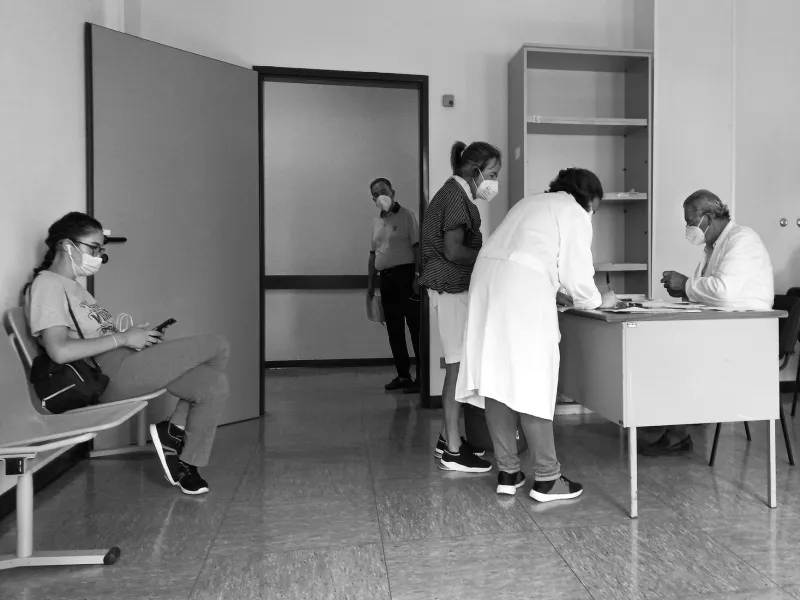
Waiting Is Not a Treatment Plan: How American Patients Are Taking Control of Their Medical Timelines Through India's Specialist Network

There is a particular kind of anxiety that settles in after a primary care physician says, "You need to see a specialist." For most Americans, those words do not signal the beginning of a solution. They signal the beginning of a wait — one that, depending on the specialty and geographic region, could stretch from eight weeks to well beyond six months.
That wait is not a neutral event. It is not empty time. For patients managing suspected cardiac conditions, early-stage cancers, neurological symptoms, or unresolved autoimmune disorders, every week without a specialist consultation is a week during which a condition can progress, treatment windows can narrow, and outcomes can quietly worsen.
This is the reality that thousands of American patients are now confronting — and increasingly refusing to accept.
The Numbers Behind the Wait
The physician shortage in the United States is well-documented, but its downstream effect on specialist access rarely receives adequate public attention. According to data from the Association of American Medical Colleges, the US could face a shortage of up to 86,000 physicians by 2036, with specialist fields bearing a disproportionate share of that deficit.
The consequences are measurable. A 2023 survey by Merritt Hawkins found that the average wait time to see a cardiologist in a major American city exceeds 21 days — and that figure reflects only metropolitan areas with relative physician density. In rural and mid-sized markets, the same appointment can require a wait of three to five months. Dermatology, rheumatology, neurology, and orthopedic surgery face similarly strained timelines.
For conditions where timing is clinically significant, these delays carry real medical weight. Research published in the Journal of the National Cancer Institute has demonstrated that diagnostic delays of even four to eight weeks in certain cancer types are associated with measurable reductions in survival rates. In cardiology, unaddressed arrhythmias and structural anomalies identified during primary care visits but left awaiting specialist evaluation represent a documented source of preventable adverse events.
The system is not failing patients through negligence. It is failing them through structural inadequacy — and patients are beginning to look beyond its borders for relief.
What India's Specialist Infrastructure Actually Looks Like
India's medical system has developed along a fundamentally different architectural model than the United States. Rather than routing patients through a gatekeeping primary care layer before specialist access is granted, India's leading urban hospitals operate as integrated centers where multiple specialties function in parallel, with patients able to access subspecialty consultations directly and rapidly.
The specialist depth at institutions such as Apollo Hospitals, Fortis Healthcare, and Manipal Hospitals is not incidental — it reflects decades of deliberate investment in building physician capacity across cardiology, oncology, neurosurgery, orthopedics, nephrology, and a range of other disciplines. Many of these specialists hold postgraduate training from institutions in the United Kingdom, the United States, or Germany, and maintain active research affiliations with international medical bodies.
For an American patient who has been told to wait four months for a rheumatology appointment, the contrast is stark: at a major Indian medical center coordinating through Mera Clinic India, an initial specialist consultation can typically be arranged within one to two weeks. Comprehensive diagnostic workups — imaging, laboratory panels, and specialist review — can be completed within a single visit cycle of three to five days.
The specialties with the most dramatic wait-time differentials between the US and India include:
- Oncology and surgical oncology: Where diagnostic delays in America frequently extend beyond eight weeks, Indian cancer centers routinely complete full tumor workups and multidisciplinary treatment planning within seven to ten days.
- Cardiology and interventional cardiology: Procedures including angioplasty, valve repair, and electrophysiology studies that carry multi-month queues in the US are scheduled within days at leading Indian cardiac centers.
- Neurology and neurosurgery: For patients experiencing unexplained neurological symptoms, Indian centers offer rapid MRI interpretation, specialist review, and surgical consultation on timelines that American patients describe as almost disorienting in their speed.
- Orthopedic surgery: Joint replacement and spinal procedures that involve six- to twelve-month waiting periods under many US insurance plans can be scheduled within weeks in India, at costs that frequently represent a fraction of out-of-pocket American pricing.
The Toll That Waiting Extracts
The medical consequences of delayed specialist access are well-studied. Less frequently examined — but equally consequential — are the psychological and financial dimensions of prolonged waiting.
Patients who spend months in diagnostic limbo report elevated rates of anxiety, depression, and health-related hypervigilance. The uncertainty of an unconfirmed diagnosis, combined with the helplessness of being unable to accelerate the process, produces a particular form of chronic stress that compounds the underlying medical concern. Employers report increased absenteeism among employees navigating unresolved health issues, and financial analysts note that delayed diagnoses frequently result in more expensive interventions when conditions are ultimately addressed at a later, more advanced stage.
One American patient who coordinated her rheumatology evaluation through Mera Clinic India described the experience this way: "I had been waiting nearly five months for an appointment that my insurance company kept rescheduling. My symptoms were getting worse and I had no answers. Within twelve days of contacting Mera Clinic, I had seen a specialist in Chennai, completed a full antibody panel, and had a working diagnosis. I flew home with a treatment plan. That was more than I had gotten from two years of appointments in the US."
Her account is not exceptional. It has become representative.
Planning a Medically Purposeful Trip to India
For Americans considering this route, the practical barriers are lower than most expect. Mera Clinic India facilitates the entire coordination process — from pre-travel virtual consultations with the appropriate specialist to in-country scheduling, accommodation, and post-visit follow-up with the patient's American physician.
The virtual consultation step is particularly valuable. Before any flight is booked, patients can share existing medical records, imaging, and clinical history with an Indian specialist who can assess whether travel is appropriate, which diagnostic pathway makes sense, and what a realistic treatment timeline would look like. This preliminary engagement transforms what might feel like a speculative trip into a structured medical itinerary.
For patients managing time-sensitive conditions — or simply unwilling to surrender months of their lives to a waiting room that may never call their name — India's specialist network represents something the American system has struggled to offer: a genuine choice.
Reclaiming Agency Over Your Health
The specialist shortage in America is a structural problem, and it will not be resolved quickly. The physicians, policymakers, and health economists working on long-term solutions deserve credit for their efforts — but those solutions operate on timelines measured in years and decades.
Individual patients operate on timelines measured in weeks.
For an American patient sitting with a referral slip and a calendar that shows the earliest available appointment in month five, the question is not whether the system needs reform. The question is what can be done right now, with the health situation as it exists today.
Mera Clinic India exists to answer that question — not with a workaround, but with world-class medical care delivered by credentialed specialists, on a timeline that reflects the actual urgency of human health.
Waiting is not a treatment plan. It never was.